

Nuraghe
nu·ra·ghe - prehistoric stone structures found in Sardinia
The Lost Villages Museum is a collection of eleven historic buildings that were displaced and destroyed during the flooding caused by the construction of the St. Lawrence Seaway. This project proposes the introduction of four new programs to be integrated into the existing museum campus: an exhibition space, an atelier, a café, and an artist residence. Below is the proposed exhibition space.
Instead of placing the new programs around the 11 buildings, the programs serve as a podium, raising them above for the world to see. Since these heritage buildings have little inside, their interior is emptied, and an opening is excavated out of the exhibition’s ceiling for access to the buildings. This enables tourists to look inside the structure within the exhibition.


The Corn Crib is one of the houses that rests on the exhibition. Built in circa 1860, it is constructed with sawn wood planks. Its intended use was to keep the corn protected against the elements.

The Blacksmith is the second house that rests on the exhibition. It is made of sawn planks, brick and metal cladding.
Exploded Axonometric
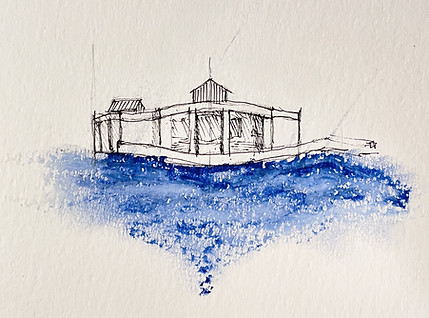
This exhibition draws inspiration from the overwhelming power of water, through its ability to shape, erode and envelop. The design channels waters’ natural movement and fluidity through curvilinear partitions and changes of elevations that guide visitors on a journey through the space.


Reception View


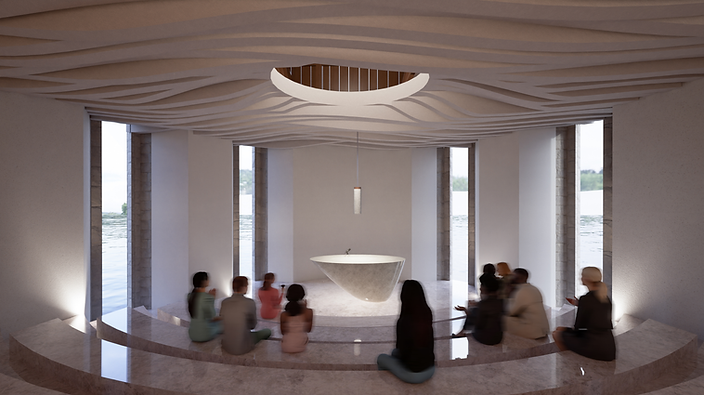
Auditorium View